Global Health & Medicine 2026;8(5):371-378.
First reported clinical implementation of pressurized intraperitoneal aerosol chemotherapy in Japan: Program development and 30-day outcomes in two patients
Takeuchi H, Gohda Y, Kitayama J, Kato T, Hieda Y, Shimano H, Kudo H, Kokudo N
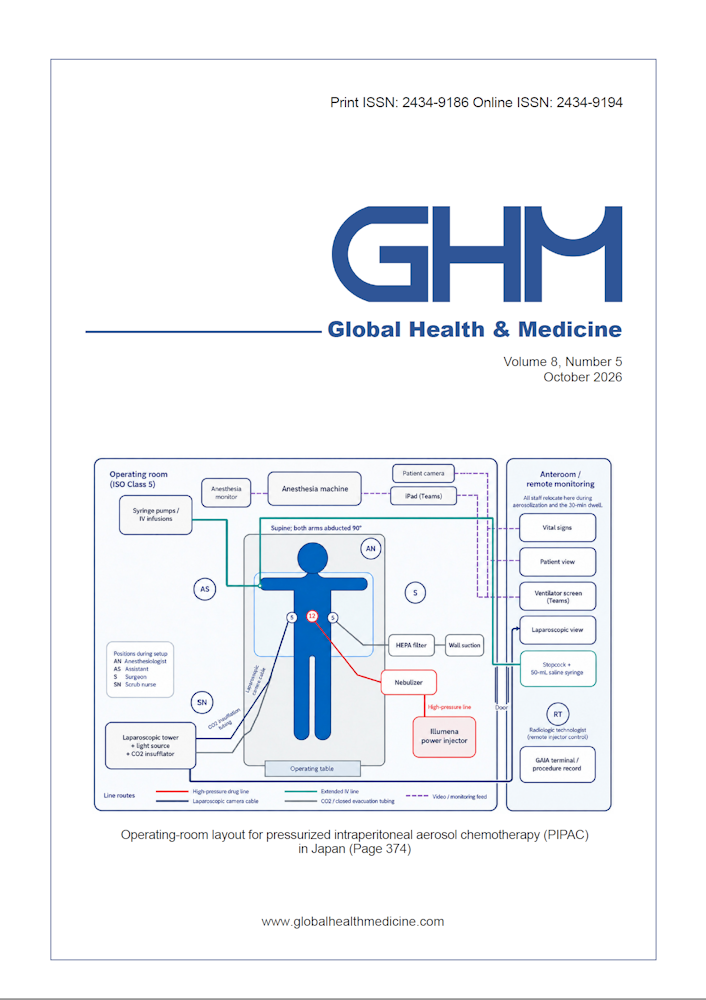
Described here is the multidisciplinary implementation of pressurized intraperitoneal aerosol chemotherapy (PIPAC) at a Japanese institution and 30-day outcomes of its first two procedures, rather than an interim efficacy analysis of an ongoing five-patient pilot study. Preparation consisted of international training and clinical observation, two porcine experiments, two full-scale operating-room simulations, a four-stage checklist, remote anesthesia management, pharmacy and injector workflows, and high-efficiency particulate air-filtered closed evacuation. Simulations indicated that ventilator-specific parameters were unavailable on the remote vital-sign display, prompting a dedicated ventilator-screen video feed. On August 12, 2026, two men with unresectable peritoneal metastases from appendiceal mucinous adenocarcinoma underwent oxaliplatin-based PIPAC. Three-port access was achieved despite anticipated adhesions; peritoneal cancer index scores were 34 and 28. Oxaliplatin was prepared at 2 mg/mL with a measured circuit dead-space allowance; injector settings were 0.8 mL/s and a pressure limit of 290 pounds per square inch (psi). Both procedures, including aerosolization, a dwell time of 30 min, and closed evacuation, were completed without observed leakage, emergency re-entry, device malfunction, organ injury, or conversion. Patient 1 had exacerbated grade 2 abdominal pain, grade 2 anorexia, and grade 1 vomiting and was discharged on postoperative day 6. Patient 2 had no in-hospital adverse events and was discharged on postoperative day 2. Telephone assessment at 30 days identified no unplanned visit, readmission, re-intervention, or new clinically important adverse event; both patients were considered clinically suitable for next-cycle reassessment. This experience illustrates a structured pathway for clinical PIPAC implementation. Trial registration: jRCTs031260298.
DOI: 10.35772/ghm.2026.01111
Full Text: